
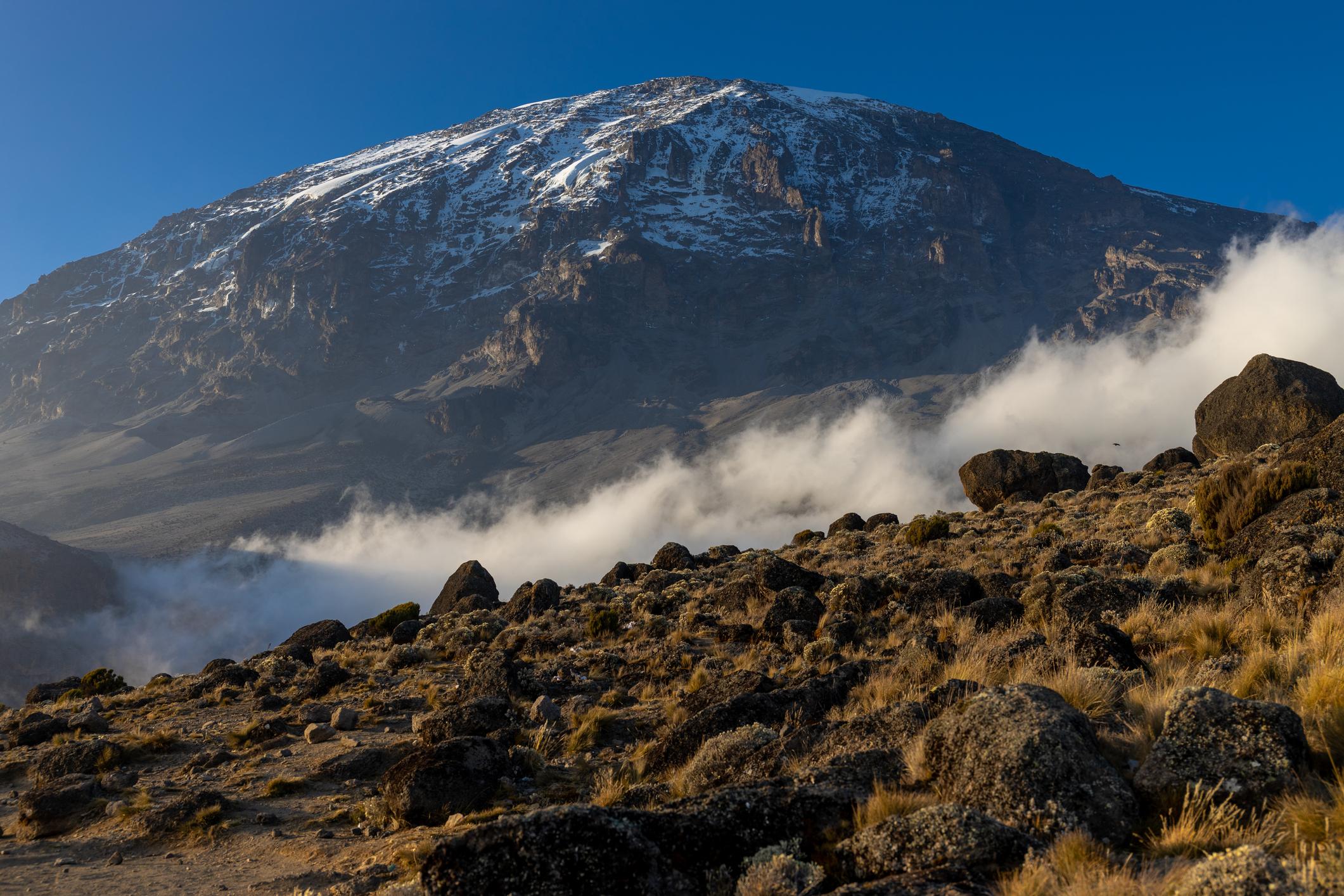
Discover Umbwe Route – The Steepest Trail on Mount Kilimanjaro
The Umbwe Route is regarded as one of the hardest, steepest, and most demanding routes on Mount Kilimanjaro. Short, direct, and relentlessly uphill, this trail is designed for highly experienced and physically fit climbers seeking a serious challenge.
It is the least used route on Kilimanjaro, offering solitude and dramatic scenery — but it also has one of the lowest summit success rates due to rapid altitude gain and limited acclimatization time.
🔎 Overview of the Umbwe Route
-
Difficulty: Extremely Challenging
-
Duration: 6–7 days (Minimum 5 days, 7 recommended)
-
Success Rate: Approximately 50–70%
-
Total Distance: ~32 km ascent, ~21 km descent
-
Starting Altitude: ~2,800 m (after 4×4 transfer to gate area)
-
Acclimatization Point: Primarily at Karanga
-
Traffic: Very low (quietest Kilimanjaro route)
⚠️ Why Is Umbwe So Difficult?
The Umbwe Route climbs rapidly with very little time for the body to adjust to altitude. Because of this:
-
Over 60% of climbers experience altitude sickness
-
Common symptoms begin around 4,000 meters
-
Nausea and headaches are frequent
-
The route is considered dangerous without proper acclimatization
-
It demands patience, endurance, and strong physical conditioning
Trekkers are strongly advised to be in excellent physical shape and prepared for the risks associated with fast altitude gain.
🌄 Scenery & Terrain
Despite its difficulty, Umbwe is considered one of the most spectacular climbs on Kilimanjaro you will experience:
-
Dense montane rainforest
-
Narrow, steep ridges
-
Moorland with giant groundsel plants
-
Alpine desert landscapes
-
Dramatic views of:
-
Western Breach
-
Barranco Wall
-
Heim Glacier
-
Summit glaciers
-
The route joins the Machame Route at Barranco Camp and later merges with other routes near Barafu Camp.
🧭 Summit Options via Umbwe
Climbers using the Umbwe Route can reach the summit of Mount Kilimanjaro in two different ways:
Western Breach Route
This option approaches Kibo from the western side. It is more technical and significantly more dangerous due to the risk of rockfall. It is generally chosen only by highly experienced climbers comfortable with added exposure and risk.
Southern Circuit to Barafu Camp
This approach heads east after joining the Southern Circuit and continues to Barafu Camp. It is the standard and safer summit route used by most trekkers.
Most climbers follow the Southern Circuit toward Barafu Camp before beginning summit night.
🗺️ 6 Days Climb + 2 Hotel Nights Itinerary
🏨 Day 1 – Arrival in Moshi (890 m)
Arrival at Kilimanjaro International Airport or Dar es Salaam. You will be met by a representative and transferred to your hotel in Moshi for overnight stay. A climb briefing and equipment check will be conducted in preparation for the trek.
🌳 Day 2 – Umbwe Gate (1,800 m) to Umbwe Camp (2,800 m)
Distance: 8 km | Time: 5–7 hours | Zone: Montane Forest
Drive from Moshi to Umbwe Gate. After registration, begin your ascent on a gentle track before joining the steep Umbwe trail. The route quickly enters dense rainforest filled with rubber trees and giant fig trees. Expect steep sections with exposed roots and rocks. Overnight at Umbwe Cave Camp.
🌄 Day 3 – Umbwe Camp (2,800 m) to Barranco Camp (3,900 m)
Distance: 8 km | Time: 4–5 hours | Zone: Moorland / Semi-desert
Leave the forest behind and climb steeply into open moorland. As the clouds clear, you may see Uhuru Peak rising above. The landscape changes dramatically with giant groundsels and unique alpine vegetation. Overnight at Barranco Camp.
🧗 Day 4 – Barranco Camp to Barafu Camp (4,550 m)
Time: ~8 hours | Zone: Alpine Desert
Climb the impressive Great Barranco Wall, which is less difficult than it appears. Continue beneath Heim Glacier and descend into Karanga Valley, the last reliable water point. After crossing ridges and valleys along the Southern Circuit, ascend to Barafu Camp. “Barafu” means ice in Swahili. Rest early and prepare for the midnight summit attempt. The climb to the summit begins around 11:00 PM.
🏔️ Day 5 – Summit Day: Barafu Camp (4,550 m) to Uhuru Peak (5,895 m) to Mweka Camp (3,100 m)
7 km up | 23 km down
Climb steep scree slopes between the Rebmann and Ratzel glaciers to Stella Point (5,685 m) at sunrise. From there, continue along the crater rim to Uhuru Peak (5,895 m), the highest point in Africa. After celebrating your achievement, descend back to Barafu Camp for a short rest, then continue down to Mweka Camp. Overnight at Mweka Camp.
🌲 Day 6 – Mweka Camp (3,100 m) to Mweka Gate to Moshi
Distance: 15 km | Time: ~3 hours
Descend through rainforest to Mweka Gate. Successful climbers receive certificates:
Green Certificate – Stella Point
Gold/Green Certificate – Uhuru Peak
Return to your hotel in Moshi for a well-earned shower and rest.
✈️ Day 7 – Departure
Transfer to the airport for departure or continue with optional extensions such as a safari or beach holiday in Zanzibar.
💰 What’s Included
Airport transfers
2 hotel nights (Half Board)
Government taxes
Kilimanjaro entry and camping fees
All camping equipment
Professional guides and porters
All meals on the mountain
Operational and staff costs
❌ Not Included
Tips for guides and porters
Personal climbing gear
International flights
Personal expenses such as drinks, laundry, or massage services
🎯 Who Should Choose the Umbwe Route?
Experienced high-altitude trekkers
Physically strong hikers
Those seeking solitude and low traffic
Climbers wanting the steepest and most direct challenge
⚡ Final Word
The Umbwe Route is the most direct and most intense way to climb Mount Kilimanjaro.
Although it has a lower summit success rate due to rapid altitude gain, many climbers are drawn to it for its dramatic scenery, quiet trails, and demanding nature.
For those who succeed, it becomes a powerful and unforgettable life achievement.
