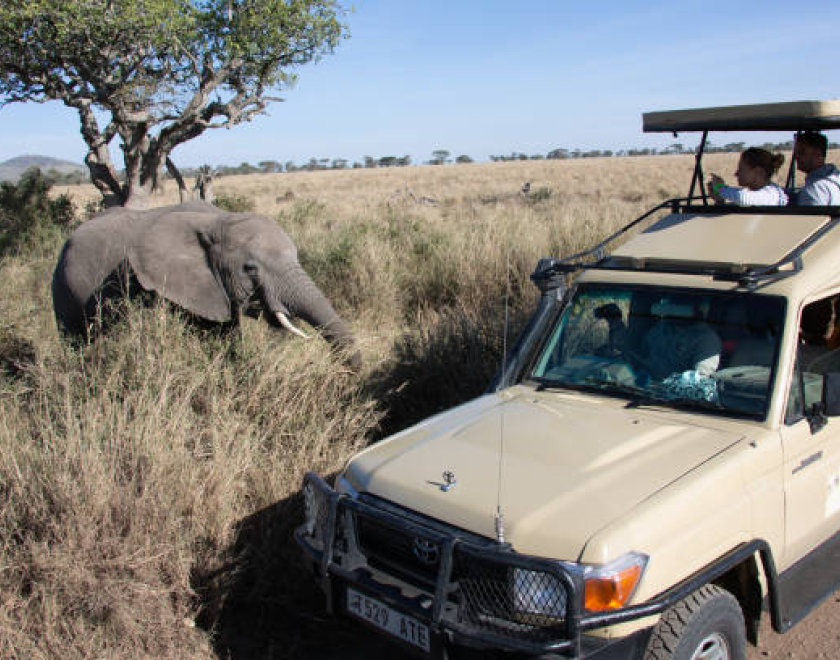
- Tanzania - East Africa
Is It Possible to Do a Day Trip to a Park from Arusha?
Arusha is often called the gateway to Tanzania’s northern safari circuit, and for many travelers, the question arises: “Is it possible to do a day trip to a park from Arusha?” The answer is a resounding yes. In fact, Arusha’s location makes it uniquely suited for short wildlife excursions, allowing visitors to experience some of Tanzania’s most famous national parks without committing to a multi-day safari.
This guide explores everything you need to know about day trips from Arusha to nearby national parks, including the parks you can visit, distances, activities, costs, best times to travel, and tips for making the most of your one-day safari.
Why Arusha Is Perfect for Day Trips
Arusha’s central location in northern Tanzania makes it an ideal base for exploring:
Tarangire National Park (2–3 hours by car)
Arusha National Park (within 45–60 minutes from the city)
Because of these short distances, it is possible to see a variety of wildlife — from elephants and lions to giraffes and flamingos — in just one day.
Popular Parks for Day Trips from Arusha
1. Arusha National Park
Distance: ~45 km (30 miles) from Arusha
Travel Time: 45–60 minutes
Why Visit on a Day Trip:
Close to the city, perfect for early morning or half-day trips.
Offers diverse ecosystems, including savannah, forest, and Mount Meru’s slopes.
See giraffes, buffalo, zebra, blue monkeys, and colorful birdlife.
Optional walking safaris and canoeing on Momella Lakes.
Experience Level: Easy to moderate, suitable for all ages.
2. Lake Manyara National Park (2–3 hours by car)
Distance: ~130 km (80 miles)
Travel Time: 2–3 hours
Highlights:
Day Trip Suitability: Full-day excursion recommended; early departure ensures maximum wildlife viewing.
Lake Manyara National Park is special for a bunch of reasons—it’s small, but packed with unique features 🌿🦩
Here’s what really sets it apart:
Tree-climbing lions 🦁
One of the few places in the world where lions are famous for lounging in trees, especially acacia trees.Huge flocks of flamingos 🦩
When water levels are right, the lake turns pink with thousands of flamingos and other water birds.Incredible birdlife 🐦
Over 400 bird species, making it a paradise for birdwatchers (pelicans, storks, hornbills, eagles—you name it).Diverse ecosystems in one park 🌍
In a short drive you’ll see groundwater forests, open savannah, marshes, hot springs, and the soda lake itself.Large elephant populations 🐘
Manyara is well known for close-up elephant sightings, often in forested areas.Hippos & hot springs ♨️
Hippo pools are common, and the Maji Moto hot springs bubble near the lake shore.Scenic views of the Rift Valley escarpment ⛰️
The park sits right at the base of the Great Rift Valley, giving it dramatic landscapes and viewpoints.
3. Tarangire National Park
Distance: ~120 km (75 miles)
Travel Time: 2–3 hours
Highlights:
Large elephant herds, baobab trees, and scenic landscapes.
Excellent bird watching opportunities.
Ideal for a classic safari experience in one day.
Day Trip Suitability: Full-day trips from Arusha are common; leave early to maximize game drive time.
4. Ngorongoro Conservation Area (3–4 hours by car)
Distance: ~180 km (112 miles)
Travel Time: 3–4 hours
Highlights:
Ngorongoro Crater — a UNESCO World Heritage Site.
Dense populations of predators like lions, cheetahs, and hyenas.
Buffalo, elephants, and zebras in a stunning volcanic crater setting.
Day Trip Suitability: Possible, but very early departure recommended. A day trip here allows 4–5 hours inside the crater.
How a Day Trip from Arusha Works
When asking “Is it possible to do a day trip to a park from Arusha?”, it helps to understand what a typical day looks like:
Early Morning Departure – Most day trips depart between 5:30–6:30 AM to maximize wildlife viewing.
Arrival at the Park – Depending on the distance, arrival may range from 45 minutes (Arusha National Park) to 3–4 hours (Ngorongoro or Lake Manyara).
Morning Game Drive – The cooler hours attract more wildlife activity.
Lunch Break – Often a picnic in the park or at a designated lodge/campsite.
Afternoon Safari – Additional game viewing, bird watching, or optional guided walks.
Return to Arusha – Arrival back in the city by late afternoon or early evening.
Costs of a Day Trip from Arusha
The cost of a day trip depends on park entrance fees, safari vehicle hire, guide fees, and optional extras. Approximate costs (2025 estimates) include:
Arusha National Park: $80–$120 per person
Lake Manyara National Park: $150–$200 per person
Tarangire National Park: $150–$200 per person
Ngorongoro Crater Day Trip: $200–$250 per person
These costs usually cover park fees, driver-guide, and 4×4 vehicle hire. Some packages may include lunch, bottled water, and soft drinks.
Book your Arusha National Park experience today and discover Tanzania’s most scenic safari gem.
🌿 Inspiring & Experiential
Step into the wild—explore Arusha National Park and experience walking safaris, giraffes, and Mount Meru up close.
✨ Premium / Luxury
Elevate your safari journey with an exclusive Arusha National Park experience. Enquire now.
🚙 Travel-Focused
Add Arusha National Park to your itinerary and start your Tanzanian adventure the right way.
Plan your visit to Arusha National Park today—contact us to customize your safari. Olduvai tours Tan-africa.
Chat with our expert direct via email!
- FIFTEEN IMPORTANT ACTS / RULES FOR TOURISTS AS PER (CAP. 282 – R.E 2002 – NATIONAL PARKS ACT)
Restricted entry into national parks
Tourists may only enter national parks with permission and must follow entry regulations and park hours.No hunting or killing of animals
Hunting, capturing, killing, wounding, or disturbing any animal, fish, egg, or nest is strictly prohibited.No possession of wildlife products
Tourists must not carry or remove animals, eggs, nests, skins, bones, or any wildlife products from the park.No weapons allowed
Carrying firearms, traps, snares, nets, or any weapon intended for hunting is illegal without special permission.Protection of vegetation
Cutting, uprooting, damaging, or removing plants, trees, or firewood is forbidden.No lighting fires without permission
Making fires inside the park is prohibited unless allowed by park authorities.No disturbance of wildlife
Tourists must not chase, tease, provoke, feed, or intentionally frighten animals.Driving regulations must be followed
Vehicles must stay on designated roads and speed limits must be obeyed to protect animals and visitors.No littering or pollution
Dumping waste, plastics, or pollutants inside the park is an offence.Photography restrictions
Commercial photography, filming, or drone use requires special permits from park authorities.Respect park officials
Tourists must obey instructions given by authorized officers and park rangers at all times.No introduction of animals or plants
Bringing domestic animals, foreign plants, or invasive species into the park is prohibited.Penalties for offences
Violations may result in fines, imprisonment, confiscation of equipment, or expulsion from the park.Defence of life only in emergencies
Killing or injuring an animal is only allowed in genuine self-defence and must be reported immediately.Compliance with park regulations
Tourists must follow all regulations made by the Trustees, including permits, fees, accommodation rules, and conduct guidelines.Key TANAPA Visitor Regulations & Policy Areas
(TANAPA National Parks Policies, 1994 – revised 2012)
1. Park Access, Entry Hours & Visitor Conduct
Policy Reference: TANAPA Visitor Management Policy (1994/2012)
Park entry is permitted only during daylight hours, typically 6:00 AM – 6:00 PM
Loud noises, hooting, horn use, and playing music are strictly prohibited
Visitors must behave responsibly and avoid disturbing wildlife at all times
2. Wildlife Viewing & Safety Distances
Policy Reference: TANAPA Wildlife Protection & Visitor Safety Policy (1994/2012)
Visitors must remain inside their vehicles except in designated areas
Maintain a minimum distance of 200 meters from wildlife
Keep at least 25 meters away from animals, especially in sensitive situations such as hunting lions or cheetahs
Feeding, chasing, or harassing animals is strictly forbidden
3. Prohibited Activities & Environmental Protection
Policy Reference: TANAPA Environmental Conservation Policy (1994/2012)
The following activities are not allowed:
Off-road driving
Littering or improper waste disposal
Feeding wildlife
Removal of natural objects such as plants, bones, rocks, or artifacts
Single-use plastic carrier bags within national parks
4. Vehicles, Speed Limits & Domestic Animals
Policy Reference: TANAPA Transport & Biosecurity Policy (1994/2012)
Vehicle speed limits must be observed (generally 50 km/h, unless otherwise posted)
Domestic animals and pets are strictly prohibited inside all national parks
5. Drone Use & Airspace Restrictions
Policy Reference: TANAPA Aviation & Airspace Control Policy (1994/2012)
The operation of drones or unmanned aerial vehicles (UAVs) is prohibited
No sightseeing or recreational flights are permitted over national parks without special authorization
6. Fire, Camping & Accommodation Regulations
Policy Reference: TANAPA Camping & Accommodation Policy (1994/2012)
Open fires are not allowed
Fires may only be lit in designated camping areas
Camping is permitted only at authorized and designated campsites
All lodges, camps, and facilities must be TANAPA-approved and environmentally sustainable
7. Authorized Activities & Indemnity Requirements
Policy Reference: TANAPA Tourism Use & Zoning Policy (1994/2012)
Authorized activities include:
Game drives
Guided walking safaris
Canoeing and kayaking (typically 7:00 AM – 5:00 PM)
Horseback riding in designated zones
Important:
Visitors must sign indemnity forms before participating in walking safaris, canoeing, or other special activities
8. Fees, Payments & Park Services
Policy Reference: TANAPA Financial & Revenue Management Policy (1994/2012)
All park entry fees and services must be paid electronically
Payments are made through the TANAPA online system or designated points
Accepted methods typically include Visa and Mastercard
9. Park-Specific Regulations
Policy Reference: TANAPA Site-Specific Management Regulations (1994/2012)
Ngorongoro Crater:
Visitors must hire a TANAPA-authorized guide before descending into the crater
Serengeti & Other Parks:
Camping is allowed only at designated, authorized campsites
10. Commercial Operations & Tour Requirements
Policy Reference: TANAPA Tourism Operations Policy (1994/2012)
Tourism activities must be conducted through authorized operators
All visitors and companies must comply with park zoning plans and regulations
Recommended Website Disclaimer
(Strongly advised)
All visitors are required to comply with TANAPA National Parks Policies (1994, revised 2012). Regulations may vary by park and are subject to change without prior notice.
📌 Build Your Tour Today!

Olduvai Tours Tan_Africa
We ensure that your journey is not just a trip but a meaningful exploration of Tanzania’s natural and cultural treasures. Let us turn your dream safari into reality!
Booking your Adventure with Olduvai Tours Tan Africa
Olduvai Tours Tan Africa specializes in creating unforgettable Tanzania safari experiences, offering expert guides, personalized itineraries, and high-quality service.
Other Tours You May book with Olduvai Tours Tan_Africa:
kilimanjaro-altitude-sickness-prevention guide /Hikers making steady progress up Kilimanjaro, staying safe. Kilimanjaro High Altitude Sickness Prevention Guide 2026+ See More…
Tanzania – East Africa Is It Possible to Do a Day Trip to a Park from Arusha? Arusha is…
